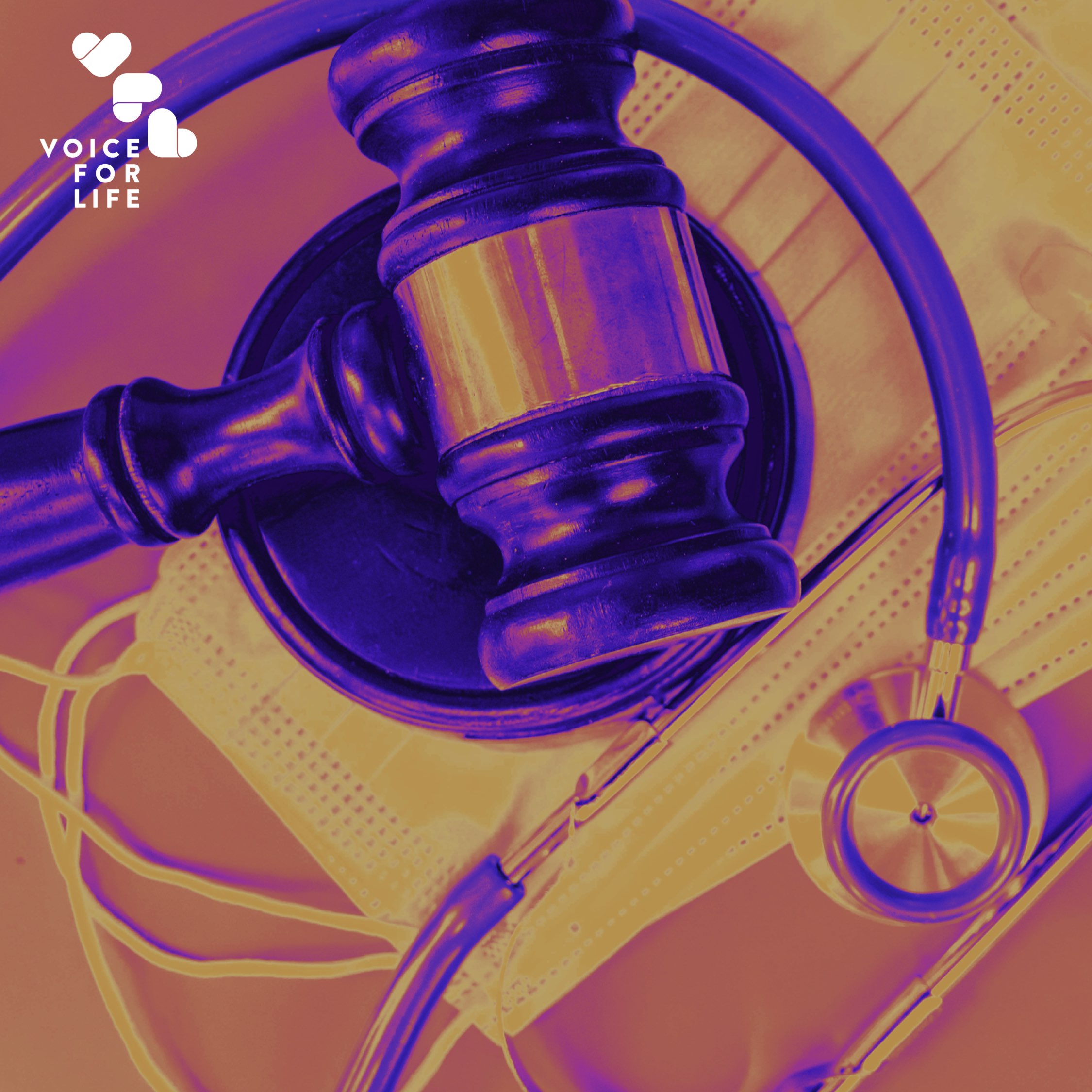
[00:00:26] Speaker A: A New Zealand doctor use expired lethal drugs that were prescribed for someone else to end a patient's life and no charges were laid. That's just one of the shocking findings from a Voice for Life investigation into New Zealand's euthanasia system. In March 2024, a doctor carried out a euthanasia death without the legally required registrar review. The lethal drugs were expired, prescribed for another patient and had been sitting unused for more than eight weeks. And what's particularly concerning the system did not catch it. The breach was only discovered the following day after a routine administrative inquiry. Despite an in depth police investigation, no charges were laid.
The police stated, and I quote, it is not in the public interest to lay charges in relation to this matter. Instead, the matter was referred to the Medical Council of New Zealand Health. New Zealand has since made some changes, but serious questions remain about whether another breach like this could happen.
When a euthanasia safeguard fails, the serious questions remain about whether another breach like this could happen. You can read the full story in our website, go to voiceforlife.org nz but today I am with Brendan Malone, bioethics commentator and someone that we've worked with with Voice for Life for a very long time. Welcome, Brendan, and thank you for joining us today.
[00:01:43] Speaker B: Lydia, it's great to be with you. Thank you for having me.
[00:01:47] Speaker A: So first of all, we want to look at some of the reactions. Some of the Facebook comments are kind of concerning and I think we should just dive into them a little bit and just kind of break them down. So Nicholas said as long as the person still died without complications, what's the issue? My father was on a medication that was no longer available, going to be available in New Zealand. He had a stack of them. His specialist said as long as they were stored correctly, they'd be fine for a couple of years. What would you say to that one, Brendan?
[00:02:11] Speaker B: Well, there's a big difference here. Like there's two different things happening. One is medication which is actually treating a patient. So you're acting, the doctor is acting for the good of the patient. And even if there is an issue with some bureaucratic regulation that might hinder that, the doctor has overridden that for the good of the patient. But this is not what we're talking about with euthanasia. With euthanasia and assisted suicide, what you're actually doing is you are ending the life of a patient or helping the patient to end their own life. And so this is different from medicine.
What's actually happening here is a person's not being given a pharmaceutical cure or a therapy, they are being given a lethal dose.
And so we're talking about lethal dosages that in this case they were not being tracked and then they were given out to someone else with no proper oversight.
There's been cases overseas where you have situations where people have found the lethal dosage who were not the intended recipient. And you can imagine how that could end up if someone else actually just took a lethal dose and ended their own life in a state of grief because it was easily accessible and available. So it's not the same thing. Whereas if someone had a life saving medicine, then, you know, there's just not going to be that same issue because they are not the same moral act at all. There's a very different thing going on here and the consequences really could not be any more real life saving medicine versus a life ending lethal dosage.
[00:03:40] Speaker A: Definitely. Lin said, not anyone else's choice. Personal choice. What about in this instance? Is it really personal choice?
[00:03:50] Speaker B: Well, the reality is this is the sort of the liberal fantasy that you just create these laws in a community where the act will take place in the community, the whole community will be affected by the law change, the law is being funded and that the action itself is being funded by the entire community and their taxes. And then to have someone turn around and say, well, it's not your choice, just, you know, basically go away, is just so incongruent with reality. It is not. It is, it is actually just not logically sound at all. This is taking place in our community, it affects our community and, and it has a bearing on all of us, not least of which is the actual medical practitioners who are now becoming killers of patients. And we know, for example, from other research in the veterinary space that there are huge and serious issues with ptsd.
It's become such an issue for vets who have to euthanize animals that there's a whole conversation that's been going on for several years about, well, how do you manage that, how do you treat that? Now imagine that in the case of doctors who are euthanizing human beings, the problems, at very least it's going to be the same. I would suggest it's going to be a lot worse because it's actual human beings here. And so everyone is affected by this and it's being funded by the taxpaying community of New Zealand. So this idea that you can just have an individual action that takes place in the community and something as serious as this that involves the whole system is just a nonsense, quite frankly. And I think it's also a reflection of what the implications are for the whole community. So, so imagine if someone was drink driving and you know, someone reacted to that, said, oh well, someone got caught drink driving on a, you know, country road. They were 10 times over the limit. I know that's a bit extreme, but let's imagine they were 10 times over the limit. They didn't actually harm anyone, they didn't cause an accident, so just, you know, it's their choice, leave them alone. That's not how this actually is supposed to work and it's not how functioning societies work. So there's a well being issue about this particular action that happened in this case, that if this keeps getting repeated then you've got a problem if that affects the whole community. So of course the community should be invested in this issue.
[00:06:01] Speaker A: Well, and the other thing is we don't actually know that the person who was killed wanted it.
Yeah, we can assume that they did, we can assume that they requested it or whatever, but we don't know for sure because I mean, there was no psychological tests, there was no like, you know, all of those normal oversights that actually happened.
So we don't actually know that it was personal choice.
Next person. Vince said, I'm not sure what the problem is of how out of date they were.
Is the doctor not the best person to decide the outcome was the same? Sorry, bad grammar in that sentence. But anyway, can't see the problem.
[00:06:36] Speaker B: Well, again, this is what to determine
[00:06:38] Speaker A: that the guy could die?
[00:06:40] Speaker B: Well, yeah, and that's the point. Again, we come back to that original point. This is not a doctor treating a patient and giving therapy. This, you've, I think this is one of the, I think extremely duplicitous things about legalized euthanasia and legalized assisted suicide is that it was brought into the medical system. And I am confident that it was done that way to try and give a sense of legitimacy to it because doctors consistently are considered to be the, or some of the most trustworthy people in society still. And so you give legitimacy to the act of euthanasia and assisting a person's suicide by involving a doctor in reality, you don't need to have a doctor doing it though, because they're not doing medicine here. They are giving a lethal dosage to kill a patient. That's the exact opposite of what medicine is, which is about either trying to bring relief, trying to bring care, trying to heal, trying to bring a cure, whatever it might be. Right. Carry out a surgical operation. It's it's none of those things. So for people to get clarity about this and good moral clarity, the best thing would be for them to say, I need to think of these people. Even though they are qualified doctors in this moment, they're not doctoring. These people are actually not doctors in this moment. They are certified agents of the state. And the state has given them a legal authority that no one else in New Zealand has.
Even our criminal courts don't have the authority to execute guilty people who are guilty of heinous crimes. But there's a group in our country who have been given a special authority by the state, a license to actually do deliberately take human lives knowingly to kill a person. And they've set up parameters about what, when this can happened and, and how this is all supposed to unfold and who these people are, all these other parameters that have been created around this. And so what's happening here is you've got state agents who have been legally sanctioned to actually kill human beings in this country. So it does not get any more serious than that. The stakes are real. So this is not like other types of areas where the law might be contravened. So imagine someone who is. If we go back to a driving analogy, imagine someone who's caught doing 55 in a 50k zone. I think we'd all say, well, that's within a reasonable tolerance, you know, that you shouldn't throw the book at someone, what's the big deal?
But if that same person was caught doing 185 in a 50k zone, we now recognize that in actual fact, you've now climbed into a whole different area.
And what you've got now is a form of behavior that is extremely dangerous. And the risks and the stakes are much higher. They, they, you know, they get really serious. It doesn't get any more serious than a person who's been licensed to actually kill New Zealanders upon request. And so to say, well, just let them have their own discretion to do that however they see fit. I'm sorry, but that just does not carry any water whatsoever. You would not tolerate this.
Let's say if you had judges in courts, it was like, yeah, sure, the law says this is how a judge is supposed to conduct themselves, to have a fair trial, but just let them decide and make up their own rules for how they will conduct a trial. We wouldn't tolerate it. Politicians, we wouldn't tolerate it. But for some reason we've got someone here suggesting that it would be okay when you've got a licensed agent who has the license to actually kill people.
They can just sort of do that as, as and when and how they actually decide is the best way to do it.
[00:10:05] Speaker A: Totally agree.
Catherine says anti right to die clap trap. No one has the right to tell someone how they have to live or die. There is no such thing as a pain free death. It's a personal choice. I think we can see the reality here is was it a personal choice?
[00:10:22] Speaker B: Well, there's several errors falsehoods in that statement. First of all, the claim there's no such thing as a pain free death is absolute nonsense. That there are so many people who just pass away in their sleep and experience no pain. There are plenty of people who die very quick and even obviously in tragic circumstances but quickly die and don't feel it. So I mean that's just, that's, that's just not even true. Secondly, the claim that you know, this is anti right to die. Well, there's no such thing as the right to die because everyone you like, you can't claim something that's a natural inevitability as a right. What you can do is you can claim a good as a right, like the right to life, because life is a good. And, and the reason you can claim it as a right is because you can be deliberately deprived your life. And so that's why a corresponding human right exists. But death, no one can deprive you of death. It will happen to you one day. Everyone, as the old saying goes, the grim reaper is a communist. Everyone gets the same payout in the end and so it will come for you. And so there's no, it's, it's kind of odd. It's like saying I have a right to get old in the mo. In the time it took me to say I have a right to get old, I've just got older and no one could stop it from happening. So what we're really talking about here is not a right to die because you already had that in New Zealand. No one was required by law or by the healthcare system to go on living longer than nature intended. You could refuse burdensome treatments, you could have do not resuscitate orders, you could have the refusal of food and water at the end of your life if they become burdensome, etc. Etc. So you could actually allow nature to take its course. But what we're talking about here is euthanasia and assisted suicide. And what people are actually claiming here is a right to either be killed by a licensed practitioner of the state or A right to have someone assist them in their own suicide. And that's a whole different issue altogether. And that's, you realize then there's a moral question and everyone just to sort of write off the opposition to that is claptrap. Like, this is the problem when you use euphemisms, you miss the deep reality and the. And the deep and very serious stakes that are at play. So you talk about a right to die or assisted dying, and it all just sounds very generic and natural. And so you'd say, well, why would someone be opposed to that? But when you use the honest terms of euthanasia, where you've got a practitioner deliberately killing a patient, or assisted suicide, where someone has taken their own life, now you realize there are still moral questions and there are still big and serious stakes involved in this. And. And so just to sort of write off those things as claptrap is just. It's just not. It's not humane, basically. And this is the typical sort of reaction to this whenever you have a serious crisis around legalized euthanasia. And this has been the track record, wherever you legalize euthanasia, you have problems. And these problems consistently grow more serious in nature as time, you know, as more time elapses from when you've legalized it.
And to just write this off and to say, oh, who cares? It's just clap trap. These people don't like euthanasia, so just don't listen to them. It is both inhumane and it is also extremely foolish on your part, because one day you could find yourself on the receiving end of some abuse of this, you know, this grand and glorious thing that's been sold to us as, you know, the great way to solve problems at the end of life.
And then all of a sudden you find that you have no advocate, you are defenseless, defenseless or someone you love. And all of a sudden you realize, yeah, maybe I should have actually been a bit more engaged with what those who disagreed on this point were saying, because maybe there was some wisdom in what was actually being said.
[00:13:57] Speaker A: No, exactly.
And then Ray said, or Rhea said, so you were saying pre Medi mediated murder, yet not naming names or providing any evidence. Interesting.
[00:14:10] Speaker B: Yeah. So this is the claim here that first of all, as far as I can tell, Voice for Life is not claiming that this is premeditated murder, are they?
So this is. This is not what's being said here.
And I think, again, this is important. What you see here is often at times like this, you're really starting to see the Moral illiteracy, if I can call it that, in our culture, in our. There's just sort of this illiteracy about what moral good, moral philosophy is like, what an evil is, what a good is, what different actions are when you're actually committing an evil versus when something's happening accidentally. So murder is obviously the intentional killing of a patient, and premeditated murder is you killing a patient without consent. No one is claiming that's what's gone on in this case. But here's the thing, regardless of that fact, the point is, and I'm pretty confident if people read the article, they'll understand and get the gist of this, this act was clouded in all sorts of secrecy. Effectively. There was such a lack of transparency and there is no way to name any names because those names are not anywhere to be named. And some of those names, it might be appropriate to keep them concealed, but other names, you really got a question like, I don't know. I look at this and I think, would I want this person as my doctor? I'm not sure I would. And so does the community have a right to know if this person is also practicing legitimate medicine, that other people might say, well, I want to stay clear of this person, or if you've got an elderly relative, I don't want that person involved in the care of my elderly relative, especially since the community is funding what they're doing as well. So, yeah, it's. There's a question about transparency here, but it's not Voice For Life's fault that you can't report on all the details, because the details are cloaked in a layer of secrecy. And by the way, this was one of the things right at the very beginning, there was a group called, called Lawyers for Vulnerable New Zealanders who gathered together, legal experts, lawyers, King's Councils, some very highly qualified incompetent people who gathered together and issued a statement warning about legalised euthanasia. And this was one of the things they actually warned about was the law. And the bill which became law was actually constructed in such a way as to shroud the act in secrecy and to deny proper transparency. And again, if we go back to that analogy, this is not like someone doing 55 in a 50, this is someone doing 180ks.
[00:16:29] Speaker A: And.
[00:16:30] Speaker B: And let's say that this was happening consistently in your community.
You'd probably want to know who was doing that and who the lawful authorities were who weren't actually preventing that from happening.
[00:16:43] Speaker A: Totally. And we're going to dive into the prosecution or the lack thereof a little bit more later too, because I think that's something that's really, we need to dive into. But first of all, let's chat about a little more about the safeguards in our laws, or lack thereof. Todd Stephenson, the ACT MP who wants to expand our euthanasia laws much further, talks about how great our safeguards are. We see a situation here where the protest has not been followed and the doctor has not been prosecuted. So what kind of safeguards does that show that we actually have?
So are the safeguards actually working?
The law promised the safeguards, you know.
[00:17:19] Speaker B: Yeah, and this is the key point because, because what is a safeguard and surely a safeguard, the whole point of a safeguard is that it is a, a guard rail that prevents something from happening.
And, and, and the reality is what we're discovering here is that in actual fact, safeguards are only as good as the paper they're written on. And especially in this case because you're talking about the killing of a patient. So if a patient has been killed, it's. Even if you enforce the safeguard in the strictest way and say, well, that doctor's gonna be struck off, it's too late, there was no safety and you couldn't prevent what happened from happening. So the whole safeguard thing is a really, I think it's, again, it's one of those great euphemisms that sounds so wonderful and lovely and gives us a sense of, oh, there's security here, there's preventative measures, but when you stop and think about it, you realize, well, who's actually watching, who's in the room at the time, like to give oversight to that. And as you can see from this case, there's all sorts of areas where they hadn't even properly considered the implications of, well, what about once the lethal dosage is prescribed and then given out, who's tracking it?
The fact the Ministry of Health had to, as a direct result of this case, have had to change their procedures tells you they had not properly thought through the safeguards, quote unquote, before, before we even got to that point. And so there's this, that's the question that's a big issue before we even get into the, the other side of it, which is, well, what happens once someone actually violates one of these so called safeguards? And again, if I go back to the lawyers for vulnerable New Zealanders, they were very explicit in their warnings that there were the so called safeguards were not actually proper safeguards at all. And this law was just lacking in all sorts of ways. And now we're starting to discover, this is one example which really highlights that. But then if you're not going to actually go ahead and prosecute people who violate these boundaries that are supposed to exist, then you've really got to ask, well, what are they? Are they actually legal boundaries? Are they limits or are they just recommendations? Well, we recommend that you don't do it this way because that's what, by the way, this is what we're starting to see in other countries. The Netherlands is infamous for this, where you get doctors who violate the, the so called boundaries, legal requirements and extreme and serious ways. Like right back in 2016 was when this happened. There was an elderly lady who had signed an advanced care directive saying this is in the Netherlands, saying that she wanted euthanasia. But when the time was right and she wasn't consenting at the time she was euthanized, the doctor, female GP came into her care home.
She was resisting saying she didn't want it. The family and the doctor were like, well, no, it's because she, she's her mother. Mind is not, her faculties are not clear. So if she had clear faculties, she'd know, she really would want it. Even though the whole point of her asking for it in future was if my faculties go. So the whole thing is this perverse vicious circle that's now working against her and she's resisting. So she's saying, I don't want it, she's not giving her consent. And so what do they do? They put a sedative in her coffee that doesn't quite work. So the family holds her down and then they administer a lethal injection and kill the lady.
The oversight committee says, well, we don't think this is best practice and we don't want the doctor punished, but we want it to be referred to the courts. And they were very clear about this because they wanted the courts to clarify, well, what about other doctors in this situation? In other words, they're already thinking of a future where this will happen again and again.
The courts, it goes before the courts, it comes back from the courts during the COVID period and they said the same thing. Yeah, the doctor believes she was acting in the best interests of her patient. And even though she had violated what was supposed to be, surely that's the most rock solid of all boundaries. Never kill a person who hasn't consented. You know, surely even if you're militantly pro euthanasia and pro assisted suicide, surely we can agree on that point, that, that if a person who's saying, I don't want this, you definitely shouldn't be killing them. That's homicide. Right. But even that in that jurisdiction was. There was no consequence that resulted from it. And so you've now got a situation in the Netherlands where according to case law, if you sign an advance care directive saying, well, in future, I'd like it, you're now waving away your right to consent, which is insane. And so this is the whole point. If these legal boundaries are not enforced, and because the stakes are so serious, they have to be enforced strictly and swiftly. And if they're not, then guess what's going to happen? People are going to the practitioners who are licensed by the state to take lives. They are going to treat these things merely as recommendations. And there will be a, an ethos and an attitude and a culture that evolves around euthanasia and assisted suicides whereby there is just. The safeguards are just not respected, the legal boundaries are not considered to be watertight, and they are considered to be something that is negotiable. And if you think that's a good idea, I mean, I don't know what to tell you other than, well, good luck with the future that lies ahead for you because you've really made a bed that I don't think you do want to lie in. But that's, I mean, as I said, I don't know what to say to people who just don't recognize that particular problem.
[00:22:32] Speaker A: No, it's definitely true. I mean, in this instance, the mandatory registrar review didn't even take place before the person died. And the only way it was discovered was just kind of through this, you know, check afterwards to check where the medication was at, or no, actually about the status of where a person, person's request was at. And then it was like, oh, no, that person's already died. And it's like, what? So when, when were they actually going to find out that it happened? You know, the other concerning part though is that. And we'll jump back to some of this other stuff, but like the lethal drugs, they've been sent out from these pharmacies and then they're supposed to be coming back if they're not used within a certain time frame. But only 13.5% of them from one dispensing pharmacy and 33.59% for exact number from another pharmacy. So like within, within the required timeframes. And so obviously now they've changed that in order to, you know, make sure that they're coming back sooner. But the compliance is still only 82%.
[00:23:32] Speaker B: Well, so how many you think? Yeah, when you think about this, Lydia, the implication is people probably think, oh, okay, it's just like a linear, like imagine a railway track.
The lethal dosage goes out on the track.
It's a very straight line, and then it sits on that straight line and then it comes back again. If the lethal dose is not used to kill a patient. Well, as we see here, that clearly didn't happen in this case, but that's not what it is.
So what you're actually talking about here is you are talking about lethal dosages that are being put into the community, where they could end up from there or how they could be used.
There's a massive and very serious question here. Like I said, what happens if someone else, because of this lack of proper oversight, just decides that they don't want to be alive anymore because of some tragic grief that has overcome them, or because they are in a state of melancholy, or they have mental health crisis or whatever it might be.
And they are able to access these untracked lethal dosages. And remember, they only exist for one reason. They don't exist to cure a headache or to treat a person. They exist to kill a person, to end a life. And so it's clear what they're for. And if you know where they are and you can get access to them and you're in a state of mind that predisposes you to using them, then where is the oversight? Like, that's what I'm saying is it's like it's not just a sort of in and out sort of thing. It is something that has just been put into the community. And from there it really is anybody's guess as to what actually happens from that point. And this again was one of the things that was talked about at the very beginning before the law was even changed.
What are you doing here?
This whole idea, we go back to one of those original commentators. Oh, it's just, it's a personal choice. No, the whole community now is carrying a brand new risk that did not exist before. You created this risk by making this law. And so, and that's just one example of many risks now that and changes that have happened in the, in the whole community.
And so, yeah, it's, it's. I just, to me, I just think you wouldn't act this way even with Panadol.
Like, you can't. My kids at school can't just go to the school office and get pain relief. The parents have got to consent to that. So this is Panadol. We recognize the risk.
And because we recognize that Panadol can be something out of control, it's not a good thing. But these lethal dosages, that's their sole purpose. They're not designed to do anything therapeutic. They're designed as a high dose and highly efficient. That's the theory anyway. Killing machine. And you just put it out in
[00:26:21] Speaker A: the community, very risky. I mean, and you know, we could say, well, it's a very high percentage, it's only small percentage left out there. Well, I mean, it was still 61 late returns after they make the changes. So there's still a lot of medication that's somewhere out in the community. So.
[00:26:36] Speaker B: Yeah, well, think about that in practical terms, that that's 61 potential lives that could be ended. And if you're just gonna sit there and say to me, oh, wow, you know, this is just the price of doing business, then I'm gonna say that I don't want anything to do with your business because quite frankly, again, can I go back to this? This is not how humane communities act, actually function and thrive. This is how they collapse in on themselves and end in very dark ways.
[00:27:06] Speaker A: It's very true. I mean, if you look at some of the safeguards, and some of the safeguards that were bypassed in this specific instance would have been so like the registrar review. But I mean, we look at, you can tell more about like the registrars and what's actually happened with that over the last few years. How, how, how many people are there even in that group of people?
[00:27:26] Speaker B: Well, then this is another interesting issue because people may or may not remember this, but in this case, unlike this latest case, where so far I've seen no media reporting, which I think is just obscene, because remember, we're told we're promised all this stuff about how it's safe. Well, how do you know that? And surely the role of the media is to actually go and do the work that Voice for Life had to do here. Voice for Life went and did the leather work that good investigative journalists would do, got OIAs, went and checked, found out stuff, because clearly the report indicated something was amiss here.
The media, meanwhile, are just sitting by as someone like David Seymour has gone social, on public, on social media in recent months and said it's working as intended. There's been no issues whatsoever and no one's checking. The media hasn't even got that basic curiosity to say, maybe we should actually check these claims. They seem to want to fact check Every other thing. But this time they just don't want to fact check the claims. Right. And then you have a report that comes out which highlights there is potentially a serious case here. They still don't want to fact check the claims. And so a Voice for Life New Zealand is the one that actually shows proper due diligence and tries to show some care and concern for the community and get out there and deal the leather work to find out what's going on. Meanwhile, the day after, Voice for Life publishes this expose, a investigative report showing what's actually happened and the seriousness of it. What do we get? The Herald, in the Lifestyle section, as you've already alluded to, they run an article telling people all about how positive euthanasia is and how you can access it. Which again, if we go back to the question of safeguards, one of the supposed safeguards was doctors are not allowed to raise this with their patients, so they're not allowed to suggest it to you. Okay, but did anybody think about what would happen if the newspapers, the media are suggesting it to people? That's what they're doing. Vulnerable people are telling them how to access this.
A lot of experts say that one of the big issues with Canada has been the fact that they got rid of that prohibition on doctors. They said to doctors, you could actually now bring it up with your patients. And so they've said that that's been a massive problem. It's created all sorts of issues, particularly for vulnerable minded people. It puts them in a state of. It puts them on the pathway when they weren't otherwise going to be on the pathway. So imagine what's happening when the media is doing it. And then at the administrative level, if we could call it that, within the Ministry of Health there is supposed to be this whole ministry dedicated to euthanasia people and assisting in their suicides. And that ministry is supposed to have part of it as an oversight committee. But what you see now, and this is where I started with, sorry, is the reporting a couple of years ago about this.
This is a. I think it's still only a three person committee, which is not huge, but that's what it is.
There was an incident that happened a couple of years ago where one of the committee members actually asked for copies of the death report. So these people, remember, are seeing the, the actual cases, they're reviewing the cases after the person's already dead. So that's the bare minimum. It's not even really a preventative measure. It can't save someone who's about to be wrongfully killed. They can just identify wrongful killing. So, so they are looking and they go asking for information that's not contained in the reporting that's given to them. And they are basically told, that's not your purview, that's none of your business, that's not what you're authorized to do. And all of a sudden when I was reading this reporting in the Herald, it's pretty clear. Then you realize this committee has been set up to look like oversight, but really it's toothless. And then that person effectively, I'm not entirely clear on how that all unfolded, but they either were pushed out or they effectively felt they were being ushered out. And so they are off the committee. And then a second person not long after resigns because they see the same problems. And then you go through a period where there are many months where there was no oversight committee operating whatsoever because they didn't have enough members.
And so you've really got to wonder here when people make these claims about how safe it is, you really have got to wonder how serious these people are in actually acting for the good and the protection of the New Zealand people. If you can just have something as basic as an oversight committee that's supposed to be checking death reports to see if wrongful killings have happened and they're not even operating for many months, no one seems to care about it.
And this case, I think is a reflection, this latest case is a reflection of that lack of care.
We saw something similar, by the way, with the Abortion Legislation Act. When that was passed in 2020, the parliament made a big deal about how they weren't going to pass an amendment that was proposed that would ban, that would make it illegal to have a sex selective abortion. So you abort a child because it's not the right sex, you want a different sex, so you kill the child because it's not a boy or it's not a girl, predominantly it's girl babies that suffer on the end of that.
And so they, they didn't pass the amendment, but then they turn around and say, oh, they don't want this happening in New Zealand. They think it's a very serious thing. They object to that. That's the kind of languaging they talk about. I've really got to wonder though, how serious you are when you as politicians have the actual power to do something about it by writing it into law and you don't. That leads me to believe that you're not really as serious as you're claiming you are about this issue. And, and then they say, we want a report. You know, we're going to have this report back and several years later we'll get a report back and we will specifically look at this, the report will examine this question. What we find in the official report when it comes back is that the Ministry of Health didn't have a proper mechanism. So when doctors actually ring up saying, I've got what I think is a suspected case of a sex selective abortion, there's no proper reporting mechanism, there's no proper handling of that data.
So we still don't have any real clarity around this. And this is, this lack of care, this lack of oversight here. And it just, to me, it is absolutely obscene because even if you're someone who is staunchly pro euthanasia, staunchly pro assisted suicide, surely we can at least, you know, be in agreement that if you're going to carry out these acts, then there should be a level of transparency that is above anything that's normal. Because these people, as I said earlier, have been given a power by the state to deliberately end or help people end their lives. It doesn't get any more serious than that. So you'd think the transparency, the scrutiny, the oversight would be more serious than anything else that happens in our country. But as we're discovering, it's not really the case.
[00:34:05] Speaker A: Totally true. And I mean, if we look at one of the other safeguards, which is like this psychologist, psychiatric assessments, there was 13 psychologists that were, you know, assessing and now it's down to three and some regions of New Zealand don't even have one. And the, the, the reality is they're not actually checking that the person wants euthanasia or, you know, isn't being coerced or anything like that. They're just checking that the person knows that the outcome of euthanasia is going to be deaf. So kind of, kind of deeply concerning.
[00:34:36] Speaker B: But let's, well, it's also. Can I speak to that point too?
[00:34:39] Speaker A: Yeah, go for it.
[00:34:40] Speaker B: You'd think that again, this is another example, surely even if you have staunchly pro euthanasia and pro assisted suicide, surely you can agree at the very least the most basic protective mechanism you could have in place is when the person first requests it because they're now saying to you, I want to end my life.
And under normal circumstances when someone says that to you, you go, oh, this, there could be a problem here. I need to figure out what's going on in this person's life. Because that's not a normal thing to ask for, it just isn't.
And so you can't just sort of wave that away. So the very least you'd think would be that everyone who makes that request should actually have to have a proper evaluation from a psychiatric specialist, and then only after that you come back and then would proceed with the next stages.
That's for people who are supporters, surely you could say that would be the bare minimum. As I understand the data, in the first year or two out of all the hundreds of cases that happen in that first couple of years, I think there was a total, if I'm remembering this correctly, of about three cases that were referred for a psychiatric evaluation. And when that's happening, that tells me that there has been a massive change in the culture of the Ministry of Health now, because previously, if someone turned up to a doctor and said, I want to die, can you help me do that? The doctor would go, this is a cry for help. We need to investigate and help this person, not help them to die.
And now, though, the fact that only three people and so few people, and as you've alluded to the. The clearly they just don't have enough psychiatric evaluators, probably because they're not being utilized, indicates that the, the culture now is, well, it's actually quite normal for people to, to ask to commit suicide or to have someone give them a lethal.
And so we'll just treat that as the normal course of action, not as if it's a mental health crisis. And that's shocking when you consider how serious mental health is and how consistently in cases where people are given a terminal diagnosis, that in actual fact a mental health decline is very much part of that story and that journey that you have to address.
[00:36:42] Speaker A: So let's move on now to the prosecution part. So in this instance, the police have said that it's not in the public interest to prosecute and they referred it back to the Medical Council. And obviously there was some changes made within the health of New Zealand around reporting and I guess, you know, sending back the lethal drugs and all that kind of stuff. But, like, let's dig into this whole, like, lack of prosecution and what does that mean for us?
[00:37:07] Speaker B: Well, for me, this is troubling because like I said, if you've got a police officer, sorry, who pulls someone over doing 55 and they make a discretionary decision not to prosecute, not to pursue a ticket, nothing else, or I'm okay with that. I think everyone would be.
But if they were pulling over a driver who was doing 180ks in a school zone, for example, or who was drunk. And they just said, well, I made a discretionary decision not to prosecute. You can recognize something's different here. The stakes are far more seriously and are serious. And you've. I think most sane people would say that police officer has almost certainly, barring some extreme situation that's totally out of the box, that police officer has failed in their basic duty of care. It seems to me, I think most people would probably feel that way.
So I would say in this case, I feel similar. And the reason I feel similar is because to me, it's not a question of, well, was it a minor paperwork snafu or they didn't follow a procedure. The whole point is what this action resulted in and what euthanasia and assisted suicide are. That's where the high stakes come into this. It does not get any more high stakes than having practitioners who have been licensed by the state to deliberately take a human life. I don't think this would happen. I, I mean, you, you'd hope it wouldn't. But can you imagine, for example, if New Zealand had the death penalty as a legalized act and you had an executioner who violated the legal requirements of how that death penalty is supposed to be carried out? I think most people would say, yeah, that person should probably not be involved in this whatsoever. There should be at the very least a very serious police investigation, and we would hope that there would be some prosecution because of the seriousness and the gravity of what's involved here. And it feels to me that that's what's like, why is this not being treated with the seriousness? It feels like that it should be. It's what's happened here. It feels like is it's just being treated like it was just a paperwork snafu, just a little paperwork administrative error. It's more than that. Someone is dead.
Someone was using a lethal dosage that was not actually legally allowed. The law has been broken. And the law that has been broken was a law about deliberately killing or assisting in someone to take their own life. So the stakes couldn't be any more serious. And like I said, if you want to deter this kind of behavior, the only way is if there is a real deterrent because the outcomes are serious. And so you do this kind of thing and you actually suffer consequences. And as for the Medical Council, I just look at this and I think of other situations that have been in the news recently where they are willing to go after doctors and nurses who say the wrong things or who offend people. There was a case that was doing the rounds actually, in the last couple of days here in New Zealand. The Free Speech Union were talking about it, about a doctor who just felt he had to leave the country because the Medical Council investigated him for a comment he made in a private email to a sales rep that she considered offensive. And it wasn't anything lewd, it was his take on the use of Mori language in an email. And he hadn't sworn at her. He'd been. I wouldn't have personally sent the email, but there was. This was something that the Medical Council got involved with and felt they had to investigate this man, whether he was a fit and proper person to practice medicine. Meanwhile, you've got a practitioner of euthanasia and assisted suicide who has broken the law and killed a patient, and he's killed that patient in an illegal way.
And the police just saying, well, we don't think it's in the public interest. I can think of plenty of elderly people in my own life who probably do think it's actually in the public interest. And I think this is a big question mark for me. Should the police actually have this level of discretionary power when it comes to euthanasia and assisted suicide? I'm fine with traffic stops, I'm fine with other issues. But in this case, should they really have that discretionary power? Or perhaps should it actually be that power lie somewhere else? Because is a beat cop or a couple of cops who look at the, you know, investigators who look at this, are they really suitably qualified to actually make a discretionary decision? And should we put that burden upon them?
It seems to me that possibly there are other, better ways of doing this. And at the very least, I would say that if you've broken the law and you have done this, I mean, this is not just someone who perhaps did something minor, this is someone whose breaking of the law involved deliberate taking of human life and they did that in an illegal way. I think that's. To me, there's no way there should be a discretionary threshold at that point. To me, that I don't. And if that is the discretionary threshold, then, gosh, I think we're well on the way to becoming the Canada 2.0 of euthanasia, because this is not a good sign if this is where we're starting out.
[00:42:15] Speaker A: No, definitely we do not want to become Canada 2.0. But I mean, our End of Life Choice act, which is our euthanasia law, says that a practitioner is immune from criminal or civil liability. For an assisted death, but only if they act in accordance with the requirement of the act.
However, that does not prevent them from being subject to disciplinary proceedings. So the fact that the police decided not to prosecute doesn't mean that.
Like, what does that kind of mean? Do they mean. Do they think that the, that the. That the person was acting in accordance with the law? I mean, he clearly wasn't.
[00:42:48] Speaker B: Well, I mean, you'd have to say clearly the person. Well, I mean, the, the facts of the case seem pretty clear that the law was broken here. This was an illegal act.
So it's interesting. I've seen a legal opinion that was. Someone had written suggesting that the fact that they prosecuted it. Oh, I saw the, the way the police applied the discretion indicates that even they were possibly recognizing that this definitely was a violation of the act.
But for whatever reason, they've still decided not to. To prosecute the person.
But then there's a deeper question, is why is there such a clear immunity in there? It feels to me that, like, if there's. This is, you know, if this is just like typical medicine, are there other situations where doctors get this kind of level of immunity where the stakes are so high?
I can't answer that question. I'm not entirely clear on that. But it feels to me, because the stakes are so serious here, that I think that this sort of blanket immunity that's just been ushered in with this particular act.
Yeah, I look at this and I feel uneasy about that. Now. I could be wrong.
I could just be one of those people who recognizes the seriousness, the gravity of the stakes at risk here and maybe is just. I've got, you know, some extra jitters and nerves about that. But I think probably I'm not alone in that. A lot of people would sort of look at that and feel, hold on, hold on. Should the immunity have been blanket in this way? Should there perhaps have been a required investigation process or whatever? It might be, not just a disciplinary thing, like if. If, like, so you can be subject to a disciplinary action, but why would you be subject to a disciplinary action if you hadn't actually violated what the law requires? Like, you don't discipline people for doing what the law requires. The whole thing is kind of confused. It's, you know, so, yeah, yeah, yeah. Okay. You. You'd be immune from criminal prosecution, but you could face disciplinary action. So what? That seems to me, in my mind that envisages a case in which a doctor has violated the legal boundaries, but they get a blanket immunity from criminal prosecution, and instead they just. There is someone deciding, oh, we'll just refer them into the disciplinary process, which doesn't result in actual legal punishment and punitive measures against the person. And I say, why? Why would you do that? That's a big question mark. I don't know the answer to that, but why would you do that? That looks to me like a law that's been set up to actually reduce patient safety, not maximise it.
[00:45:20] Speaker A: Yeah, definitely. I mean, I guess maybe, you know, the proponents of the law would say, well, it's just, you know, because they're going to be, you know, ending someone's life. And so, you know, we don't want someone to be able to then charge them with murder as a result of it. But it's like, if they're breaking the laws, then they shouldn't be immune to it.
[00:45:38] Speaker B: Well, that's the point. If you go back to that case I highlighted from the Netherlands before, the whole point was that that doctor, she actually committed an act of homicide.
And so that is like, imagine if someone was in. Now, we haven't had anything that serious that we know of here in New Zealand yet, but imagine if you did get a case like that. And they said, well, we're just going to take that down the disciplinary path because we think that the doctor was acting in the best interest of their patient and we don't think that they should be actually charged and they should be prosecuted for an act of homicide in this case. Because they meant. Well, like, I just. This, this is the thing. This is the kind of absurdity, the elephant in the room, the emperor with no clothes. With legalized euthanasia, you have sanctioned people to take lives and now you're trying to quibble about whether or not, well, taking of life really is taking of life or should be treated as. It's like, hold on, guys, what are we doing here?
What are we doing here? And like I said, the idea that you've given a blanket immunity to someone, I just. Surely if your intent here is to say, well, they shouldn't be prosecuted, if they follow the law, then explicitly you just literally state that if the law is complied with, there is no prosecution. But if you act in any way outside of the law, then, yes, you will be prosecuted. And to me, again, if you're a staunch supporter of euthanasia and legalised assisted suicide. I'm not, for lots of reasons, but if you're a staunch supporter of that, then surely that would be. At the very least, that's one of the bare minimums again, that you would say, yeah, we've got to have that at the very least, because otherwise you could end up with situations where people break the law and then there's no prosecution.
[00:47:23] Speaker A: Totally true. Okay. One more comment from our Facebook post. Mark said not condoning euthanasia or physician assisted suicide at all, but ought to have police and public prosecutor present every time.
I mean, I guess that would stop, you know, breaking the law, maybe.
[00:47:42] Speaker B: Well, we know why they. In fact, this was a proposal that was actually put forward at one point and One of our MPs put forward a proposal that there would have to be like a.
I guess in America you might call it a grand jury, we might call it a Royal Commission of inquiry, you might call it a panel of experts, including judges and others, because of the seriousness of what it is. And the person making the request, their request would have to go before that panel and that'll have to be in or a threshold agreement level would have to be reached before it could be approved. But we know why you don't go down this route, because that's not what they want. They want effectively, quick and easy access to euthanasia on demand.
And the most active proponents of legalized euthanasia and assisted suicide, when you hear them talking about it, they think that people should be able to do this effectively for any reason they see fit, including conditions like in the Netherlands, they call now tired of life.
We see someone like Dr. Philip Nitschke, who is Australia's Dr. Death. He's the guy who is behind that awful Sarco suicide pod. That dystopian purple machine looks like a sunbed you get into and then it gases you. And he is infamously decades ago, he's on the record of saying that, yes, if someone had a deteriorating golf swing and they felt that that had actually ruined their quality of life, then they should be entitled to it. He felt young people, effectively, what you start to discover behind the curtain here is that there are a lot of people who are in these pro euthanasia groups and who are parts of these movements and they are very much at the, at the sort of driving end of the wedge who are actually pro suicide. They just think that it's your life and you should be able to take it at any time you want for any reason whatsoever. And so there's. Yeah, the gravity of this really can't be understated. And so that's why you see laws that are set up in such ways to actually create a nice easy pathway towards this, because people genuinely, their first Concern is not really on the. The safety of vulnerable members of the community. If it was, they would not have supported the law and they certainly wouldn't have supported this current version of the law. But their first priority is actually getting access to lethal dosages, making that legal, so people can either end their own lives or. Or have someone end the life for them, which is what happens in about 85 to 90% of the cases anyway. And so you really see, for whatever reason, maybe it's their own fears, their own lack of foresight about how their actions might impact the rest of the community, but this is what motivates them. It's not patient safety, it's not concern for the vulnerable, it's about getting access to lethal dosages in a legal and speedy way. And so the law is not constructed with these kind of safeguards. And as I said, at the very least you'd think they'd have to be, like, witnesses present and all sorts of other stuff, but it's just not there because this thing was rushed into law despite the time it took. There was not enough care and due attention given. And it really does raise the question, were our parliamentarians even qualified to look at this? And a lot of them will tell you they didn't feel they were, but they at least had months looking, or the opportunity to have months looking at it, and then it was just handed over to the general public to decide and they were even less qualified and less aware of when that decision was made. And somehow we come out the other side of that and now we've got these glowing articles in the lifestyle section of the media about how good this is and how here's how you can get access to it.
[00:51:13] Speaker A: So it's totally true. One last commentary on our Facebook page was from David and he said, it will happen again. Very sick or old people are too expensive to be kept alive. Now, euthanasia is often, you know, classed as, like, compassionate and stuff like that. But the reality is many people use the argument and New Zealand, you hear it all the time of, you know, the cost of medical care or the lack of contribution to society when someone is unwell, as an argument for assisted suicide or euthanasia. And what's the problem with this worldview, like, when people are valued or better off dead based on the amount of tax they pay and the cost to our healthcare system. Like, how would you answer these?
[00:51:52] Speaker B: There is a darkness that has come upon our society. I would suggest there is a hardening of heart and we have become like frogs boiling in a Pot.
And when you tolerate certain behaviors, you don't just tolerate those behaviors at that level, you start to become desensitized to them. And then you start to become willing to tolerate even more expansion and a worsening of those kind of behaviors. And then you become indifferent because you've now got this mechanism that you think exists in your society to end suffering, which is you end the life of the patient. And then you start to become indifferent to people who suffer because you think, well, just, well, why don't they just use the mechanism? And, and we call it care and we call it dignified. Why don't they just avail themselves of it?
There was a scene in the Danny Boyle movie the beach, and it's about a group of young people who basically it's. It's really is a warning about trying to build social utopias. A group of young people find an island. It's in Asia, I think, from memory in that. And they find this untouched island. It's like a paradise. And, and they young, predominantly British, but there's European. Other Europeans here, they're tourists, and they find this island. They. You have to swim over to it, and they set up what is just this perfect utopia, they think, and then they discover that in actual fact there are drug dealers who are running the island. And so they make a deal with them that they allow them to stay. But then one of the members of this perfect utopian community, they hurt. They get a wound that becomes infected one day when they're out fishing and they actually begin to die. And the community, it's such a fascinating portrayal of this. And I always think of euthanasia when I see this movie playing out, because what happens is the person is suffering and they're like, we just don't want that person in their midst. They're ruining this perfect hedonistic party society we've created. And it's horrible. We don't be reminded. So they move them out of this society and they put them in an old pup tent and out in the jungle and leave them to die.
And. And then what eventually happens is one of the other characters does take the person's life and you realize that all of this has been caused because of the lack of care and the abandonment of this person, because the indifference of this community. And they don't want to be around suffering anymore. So you see this indifference growing and then you start weighing all sorts of other financial calculus as well. And the reality is that over 65s do have the biggest health care burden. But so what that they're over 65 and we're supposed to care for them. That's what humane societies do. But now what we're seeing increasingly is people. I think in this case, this person is issuing this as a warning about the cost of how this will become a motivating factor. Because that's exactly what we're seeing happening overseas. We are seeing experts in this field saying euthanasia is a way to solve the problem of an aging crisis in a healthcare system that can't keep up. They are saying that out loud. They are proposing it, they are talking about the benefits of it. We had an MP actually here in New Zealand when the law was being passed here, when it was being debated. And I remember he published a piece because he had illness himself and he said, well, what's the problem? Why can't I get what I want, which is euthanasia legalized? And also the taxpayer gets to benefit because they don't have to pay for me. And so you see this creeping darkness and indifference that comes upon a society and then you start to realize if you're in power, well, we've got an increasingly aging population because that's what we are facing. And it's only going uphill. We've got an increasing demand for palliative care, which we are struggling to keep up with right now. And we're not even close to the apex of how high it's going to get. The demand.
The data is there. It's been known for several years now.
And then you look at something like euthanasia, which is now a cost saving tool. You're not going to want to touch that. You're not going to want to turn that off.
It's just this is, this is the reality of what our society has wrought upon itself. We chose this path and we must now live with the reality of that. I had an experience.
[00:55:49] Speaker A: I don't think we chose it.
[00:55:50] Speaker B: No, no. Well, sorry, yeah, not you and I. The royal we here. And I say we, as the majority in our country, voted. Those who voted, that's what you've chosen for us as a society. But those who endorse it, the media who glamorize it, the politicians who downplay it, I mean, of course, David Seymour. Seymour has to downplay it because his own reputation's on the line. He can't turn up and admit there's problems because he's responsible for those problems. So he's going to do anything to avoid that responsibility. Everyone's going to talk about how good it is. Everyone's going to say these people are just spouting right anti, right to die clap trap. Just ignore them.
They are the canary in the coal mine. And these cases are the canary in the coal mine. And the canary from falls over and dies. And you go, oh, the air is fine, we're breathing good air, it's all fine. And so we've bought into a system. And look, I've had just recently my own mother, who is now getting on in years, has had some health challenges of her own. And I have seen in my care for her firsthand some of the way that even just little costs like an ambulance call out how these costs begin to mount. And it gives you another level of insight into how easily these things become a reach, a threshold of becoming a sense of burden, either for family members or for the person themselves who starts to think I'm being a burden upon my family and it would be better off if I wasn't here.
This is the path we have charted, this is the course we have crossed that Rubicon. And there is, unfortunately, I don't think there's no going back now.
And the only way you go back, I think, is if the whole thing collapses into its own dark mess. And I know that doesn't sound particularly hopeful, does it? But in the meantime, I think those of us who are people of goodwill, who care about the vulnerable, who care about this stuff, who are not blinded like the frogs in the pot. We've actually got to do our best to first and foremost protect the people around you by caring for them, well, loving them, nurturing them so they never feel like they have to avail themselves of this new state sanctioned regime of killing.
Secondly, speak up, have conversations at the very least with people, share this voice for life story with people, tell them, have you seen this? This is shocking. And maybe, just maybe you might be able to save lives along the way and pull some people back from the edge and get actions taken. Even though you can't overcome the bigger problem, at least maybe you can do something to make a difference that will actually help people in the long run.
[00:58:22] Speaker A: Totally agree. Thank you so much, Brendan.
Now, I guess, what's next? Well, we all know the ACT party really wants to expand our assisted dying laws a lot further. So you know, they are wanting to remove the six month threshold, make it mandatory for hospitals to offer assisted dying or euthanasia or you know, whatever word you want to use for it, make it mandatory for hospitals and rest homes to offer on site in hospices and stuff like that. And we know that they're also pushing it a lot more into rest homes because I guess that's where a lot of the elderly population lives.
So keep speaking up against assisted dying and euthanasia because the only way that we're going to actually show New Zealand that it is wrong is by having conversations about it. Have conversations with your mp, you know, or anything like that. So, yeah, thank you so much for joining us today, Brendan. It's been super, super helpful to have a conversation and actually just dive into all of this a little bit deeper. If you guys have any questions, feel free to reach out, but otherwise go to our website to voice for life.org nz and go find the latest article on there and read up all about.
[00:59:40] Speaker C: The Pulse Podcast is brought to you by Voice for Life New Zealand. If you enjoyed this show and you think that having a strong pro life voice in the public square is essential, then please support this podcast and all of the other important pro life work that Voice for Life is engaged
[email protected] nz donate that's voiceforlife.org nz donate link in the show notes. Thanks again for tuning in. We'll catch you next time on the Pulse.